New Plymouth cool store developers appeal decision blocking $115m proposal
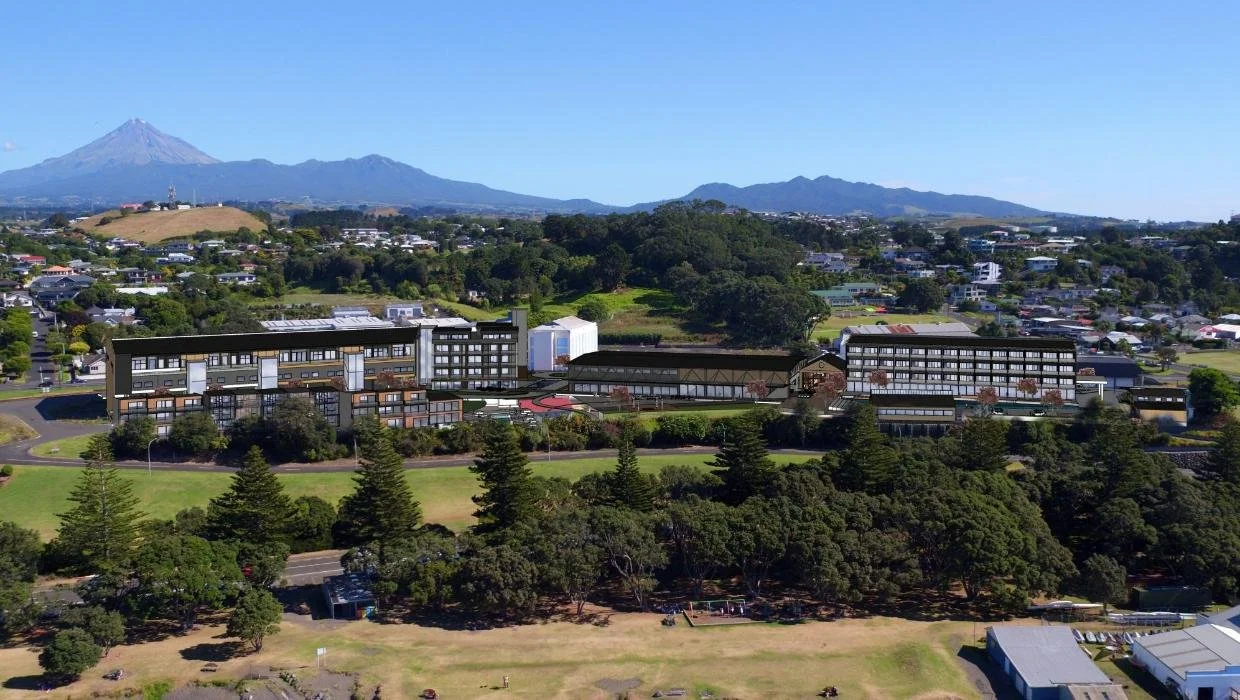
A group of Taranaki developers is appealing a decision blocking them from turning New Plymouth’s old Fonterra cool stores into a residential and business hub. Photo: Supplied / Stuff
Developers behind a massive $115 million proposal to transform New Plymouth’s port area are confident the project will go ahead despite resource consent being denied.
Seaport Land Company, made up of Taranaki businessmen Russell Nagel, Paul Hagenson, Ben Hawke, and David Hawke, want to turn the former Fonterra cool stores in Moturoa into apartments, offices, shops and restaurants.
But the group were denied resource consent after a hearing at New Plymouth District Council before independent commissioners Alan Watson and Sheena Tepania in July – a decision the developers say “hurt a lot”.
The group have appealed the decision, with the issue set to go to Environment Court, but they hope it doesn’t come to that.
“We’ve put a lot of time, resources, and feeling into it,” Ben Hawke said.
“There’s a huge amount of public support and that’s a motivator for us, if we didn’t have that, we wouldn’t be driving it.”
The developers are well known in the New Plymouth building industry and Moturoa retailers have long voiced their support for the plan, which they believe will revitalise the suburb.
New Plymouth District Council received 105 public submissions around the proposal – just six opposed the plans in their entirety.
The reasons for denying consent included the potential and actual adverse effects of noise from Port Taranaki activities, proximity to hazardous facilities and the associated risk, and not being consistent with the Operative New Plymouth District Plan and the relevant part of the Resource Management Act.
But the developers say the decision failed to properly recognise and give adequate weight to the significant positive aspects of the proposal.
In particular enabling iwi to reconnect with land, providing housing when it’s in short supply, retaining heritage buildings, economic benefits, and improvements to an intersection.
“The easy option would be to leave it as it is, as industrial, but that doesn’t feel right,” Ben Hawke said.
“We haven’t given up, it still makes sense, so we’re going to ahead with it,” Hagenson added.
“I’m confident on sticking together and getting it done.”
The group all have full time jobs and children and said the process was taking a toll.
Hagenson took to Facebook to share the decision on resource consent saying it was a huge blow to their team, who were trying to create a vibrant area and repurpose buildings.
One of the main entities against Seaport Land Company’s proposal was Port Taranaki, owned by Taranaki Regional Council, which feared new residents would complain about port activity and hinder its ability to operate.
To address concerns Seaport Land Company proposed a covenant to prevent noise complaints as well as acoustic soundproofing but the port authorities did not believe this would work.
“We’re also focusing on developing the eastern end of the site away from the Port,” Nagel said.
In their appeal the developers said while they believed the reverse sensitivity concerns had been overstated, they would work with the Port to investigate ways to ensure concerns were addressed, which included reducing the residential component of the proposal.
They hoped common ground could be met before it got to Environment Court, Nagel said.
The developers also believed the decision overstated the potential risks from a Taranaki Petroleum Company well on the site, as well as hazardous facilities nearby.
“The decision confirms that there is no undue risk to future residents from the hazardous facilities but then proceeds to decline consent on basis of potential risks from the hazardous facilities,” the appeal stated.
Nagel said they had agreed plug and abandon the well.
It is unknown when the matter will be heard at Environment Court.